

The Eswatini Water and Agricultural Development Enterprise (EWADE) company is arguably the Kingdom’s heavy hitters in terms of development impact. The company is currently in the process of building two major dams. As the Ngwavuma River will be insufficient to fill the Mpakeni Dam in the Lavumisa Region, EWADE is developing a second dam, a mega project on the Mkhondvo River West of Hlathikhulu. Tunnels will then bring the water to the Mpakeni Dam.
That’s not all. EWADE is planning to irrigate 30,000 hectares of some of the most fertile Eswatini soils in the low veld. The result will food security and high impact agri-business enterprises.
Even that is not all. In 5 years, EWADE will be building a new 100,000 people city in the low veld. It will accommodate an agro processing zone that will transform Eswatini from an exporter of raw materials into an industrial producer of finished goods to supply the world.
In this report, EWADE CEO Samson Sithole summarises their work during the year.


His Majesty King Mswati III has honoured the Eswatini Water and Agriculture Development Enterprise (EWADE) with a second site visit to the Mpakeni Dam construction project in the Ngwavuma Valley in Shiselweni.
BAYETHE! Wena Waphakathi. Wen’ongangezintaba!
The Royal Visit on 13 October 2025 is a significant moment that spurs EWADE forward in the national drive that strengthens the Kingdom’s water security, inspires agricultural development and food security and bolsters the nation’s growth and economic development.
The E2.6 billion Mpakeni Dam project under the Mkhondvo–Ngwavuma Water Augmentation Programme (MNWAP) is currently the nation’s most important capital development initiative. The project is also symbolic of the strength of international funders’ confidence in EWADE’s track record of successful management major projects and delivering results.
Indeed, His Majesty expressed his appreciation at the visible progress in the construction development.
Employment creation
Employment creation is one of the key national priorities. The dam has created employment for almost 800 people from the local communities.
His Majesty further commended EWADE for prioritising general community empowerment. Significantly, families affected by the development are resettled in modern homes that improve their quality of life and equipped with capacity to support sustainable livelihoods.
The dam is now 34% towards completion in 2028. It has reached significant milestones in key components such as development of a permanent camp, diversion chamber, cofferdam, and diaphragm wall. Once complete, the dam will irrigate up to 30,000 hectares of farmland, unlocking vast agricultural potential from St Philips to Siphambanweni, and strengthening Eswatini’s food security.
Beyond infrastructure, EWADE has placed strong emphasis on capacity building, with graduate engineers and technicians gaining hands-on construction experience at the dam. To date, over E660 million has been channelled to local contractors, service providers, and suppliers ensuring that the project’s economic impact is felt directly by emaSwati.

All of us at EWADE are deeply honoured by His Majesty King Mswati III for his tour of the Mpakeni Dam construction site on the 13th October 2025.

A Royal Visit is always a reminder of His Majesty’s interest for the welfare of his people and his longstanding vision for national development that lifts disadvantaged communities out of poverty so they contribute to sustainable economic growth.
We are all proud that progress in the construction of the E2.6 billion Mpakeni Dam project under the Mkhondvo–Ngwavuma Water Augmentation Programme (MNWAP) has reached 39% and confident that it will be completed on schedule in 2028.
MNWAP is the 10th of 14 projects under her portfolio, which are valued at a significant E14.53 billion, positioning EWADE as a catalyst for inclusive economic growth, transformation of rural livelihoods, and driver of sustainable development across Eswatini. Of these, 8 high impact projects have already been completed, showcasing EWADE ‘s ability to turn plans into reality.
We welcome our expanded role
EWADE welcomes the expansion of its role as a central driver of national development programmes aimed at poverty reduction, agricultural productivity, and improved rural livelihoods.
In keeping with the EWADE ethos for driving local value with national impact, we ensure that local communities are the first to taste the benefit of our projects. The Mpakeni Dam construction for instance has created nearly 800 jobs for the local community, a road that will soon be tarred, clean water and new homes for those affected by the construction.
In keeping with our vision of development that continuously lifts and betters the lives of people, wherever we are, EWADE invigorates the local economy. In the dam project for instance, we have spent E600,000 on procurement of goods and services from local suppliers. We also strengthen local communities’ capacity for improved quality of life through access to clean water and sanitation, dignified homes, capacities for food security and sustained income generation that secures their development gains.
EWADE’s operations now extends across all four regions of the Kingdom with activities anchored in 21 constituencies (Tinkhundla) and 57 chiefdoms (Imiphakatsi). This extensive geographic spread reflects EWADE’s mandate to serve rural populations and support government priorities in inclusive development, sustainable agriculture, and water access.
Hambu Buye pivotal to food sovereignty
Our programmes, especially the Commercial Maize Project and the Hamba Ubuye Revolving Fund are now pivotal in catalyzing a growing movement of farmers who are supporting our drive for national food sovereignty.
Core to our mission, is to deploy the power of our national rivers as a catalyst to transform agriculture into a driver industrialisation and national development.
Our people- empowerment and capacity building has already transformed many disadvantaged rural communities, opening opportunities for wealth through thriving agribusinesses. Today many of them are involved sugar cane cultivation, beef production, commercial maize, beans and a whole range of profitable other agribusiness enterprises including world-class banana and other fruit production.
During 2025 EWADE welcomed the expansion of its role as a central driver of national programmes for poverty reduction, agricultural productivity, and improved rural livelihoods. The Smallholder Agricultural Productivity Enhancement and Marketing Project (SAPEMP) launces a new important journey that will bring the benefits of development closer to the majority of EmaSwati. This flagship US$45.5 million (E851,089,000) initiative supported by IFAD and His Majesty’s Government seeks to reach over 117,600 people and create jobs for 7,500 who include youth, women, and people with disabilities.
Approach to development sustainability
Our approach to sustainability is informed by our understanding that we introduce the tools and provide the capacity for communities to stand on their own and become masters of their destiny. That is why from the start, we ensures community ownership and support through consultative and inclusive planning and involvement of beneficiaries. Throughout the project execution, multisectoral and participatory approaches are maintained throughout project implementation, ensuring continuous reflection and dialogue with stakeholders.
We also understand that no institution can succeed on its own. At EWADE we value partnerships, especially the support of His Majesty’s Government and the confidence we continue to enjoy from international funding institutions.
Our stakeholders are key to our work. Reporting to them is consistent with our corporate values of transparency and compliance. Regular updates ensure they are informed of the status and progress of our various projects.
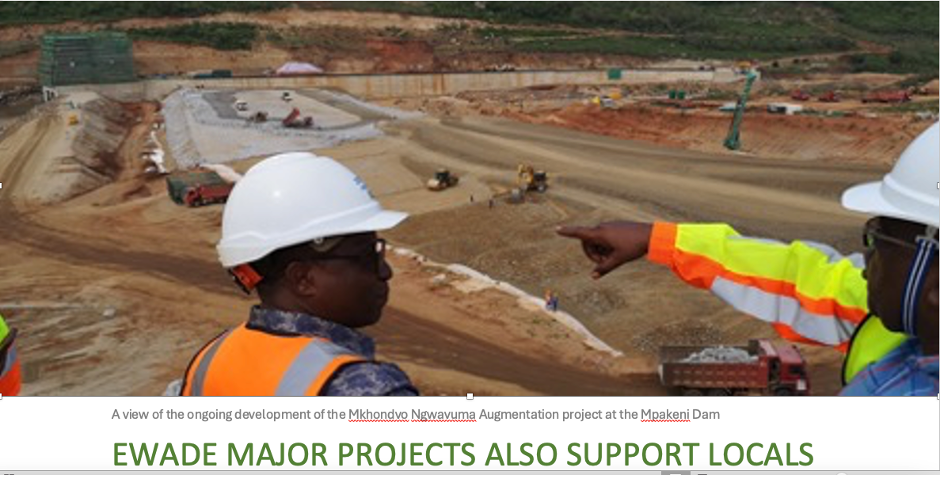
The flagship of EWADE’s work today is the construction of the E2.6bln Mpakeni Dam. This is the Kingdom’s largest ever civil works project and the third major dam dedicated to agriculture. It is common cause that construction of Mpakeni had a difficult start due to a misunderstanding of procurement policies.
At EWADE, our procurement function is firmly grounded in the principles of transparency, accountability, and full compliance with national legislation. We go beyond compliance as our strategic approach centres on risk mitigation, sustainability, and value creation. These are fully aligned with national development priorities. A key part of this strategy is a deliberate support for local Micro, Small and Medium Enterprises (MSMEs) as these are vital engines for job creation, innovation, and economic resilience.
At the same time, some of our large scale projected are financed by international institution that require us to comply with their funding requirements.
During the 2024/25 period EWADE awarded over E310, 073 million in contracts for goods, services, and works across businesses of all sizes. We are also proud to report that this amount was spent on local companies (both MSMEs), reaffirming our role in driving local economic empowerment.
Of this amount, E71.04 million (23%) was channelled specifically to MSMEs for essential services such as on-farm development (bush clearing, land preparation, and irrigation system installation) while a majority of procurement spending, E239, 034 million (77%), was directed toward Large Scale Enterprises (LSEs), this was primarily for the supervision consultancy of the MNWAP Main Conveyance System (MCS) and the resettlement project.
This procurement footprint underscores EWADE’s strong commitment to inclusive economic growth, the development of local enterprise, and the sustainable advancement of Eswatini.
EWADE regularly undertakes high value contracts to support vital national development programmes. To implement these, the Government of Eswatini normally mobilizes international loans who exercise the option of requiring use of their institutional procurement frameworks as part of the terms of the project funding. This modality was used in building the Maguga Dam, Lubovane Dam, the water conveyance canal to LUSIP I and II. Local companies are eligible to submit bids for high value work though past experience indicates that they are still unable to meet the project tender criteria.
Even so, EWADE encourages the winning bidder to engage locals as sub-contractors and suppliers of services and materials. In the ongoing Mpakeni construction, over E200 million has already by paid to local suppliers.
The Eswatini Water and Agriculture Development Enterprise (EWADE) is a government company mandated with rural poverty reduction. With approval of chiefs in communities identified for high poverty rates, EWADE brings empowering solutions that transform subsistence communal land smallholders into entrepreneurs food and cash crops commercial farming.
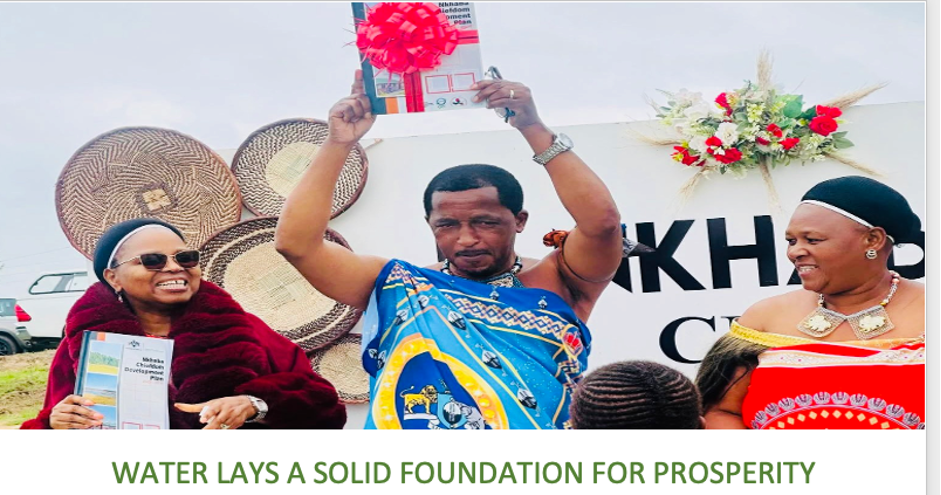
EWADE has brought water to the dry lowveld and established a solid foundation for prosperity, wealth creation, employment and sustained poverty reduction.
By 2028, the company will have harnessed all the Kingdom’s major rivers and building dams and achieved a major milestone in the nation’s water security.
Our strategic focus now, is to expand attention to strengthen increased agricultural productivity in the Kingdom’s rain fed regions, targeting the national priority for food sovereignty.
The EWADE 2022-27 strategic plan extends the lessons learned from the KDDP and LUSIP to leverage on the power of the national smallholder community as a driver of nationwide commercial agriculture.
By introducing various strategies to bring water to the rainfed Middleveld and Highveld regions, EWADE seeks to remove erratic rain patterns that are a major barrier viable agriculture.
Our approach is to introduce small community dams that provide irrigation to communal smallholder farms, thereby build their climate resilience. These decentralized water solutions will extend water even to remote communities thus ensuring that as many farmers as possible access irrigation and explore commercial farming.
Building on the foundations laid by the Smallholder Market-Led Program (SMLP), the programme will expand on the initiatives established in a six-year (2018-2024) partnership of the Government of Eswatini with IFAD and Global Environment Fund (GEF). Important lessons gained from 25 chiefdoms in the Middleveld and Lowveld areas of the Lubombo and Shiselweni regions will be applied to re-orient communal land farmers to produce a range of foods for the markets. By encouraging farmers to raise their target beyond just satisfying their homestead needs, the project enhanced food and nutrition security and boosted incomes among smallholder producer families.
The SMLP also introduced diversified agricultural production and market linkages that contributed to national poverty reduction by focusing farmers on growing crops that meet market quantity and quantity standards as well as timelines. By focusing farmers to the needs of a market with almost bottomless demand for legumes, vegetables, fruits, indigenous chickens, goats and honey, this project showed farmers simple ways from which farmers can expand income generation and improve livelihoods.
Even homesteads with limited land were introduced to food security through permaculture and provided with starter kits for backyard gardening. Permaculture which emphases the use of commonly available homestead resources enables even the poor to earn livelihoods.
The SMLP also promoted commercial livestock farming for every household, focusing on goats, indigenous chickens and honey. The project assisted farmers secure formal markets. For their produce and trained them to maintain market-level quality standards.
Crucially, the SMLP also addressed the key enablers for effective commercial agriculture productivity by strengthening local governance institutions to support commercial farming on communal land. The project helped communities to develop Community Development Plans (CDPs) country-wide. CDPs create a roadmap for communities to collectively identify their social capital and challenges and together agree on best approaches to their development. The plans create a framework for consultation and participatory processes so that all investments in the community is guided by the CDP committees and approved according to an effectiveness criteria. All infrastructure is developed together with the intended users, with groups and agreements established under the oversight of the Chiefdoms.
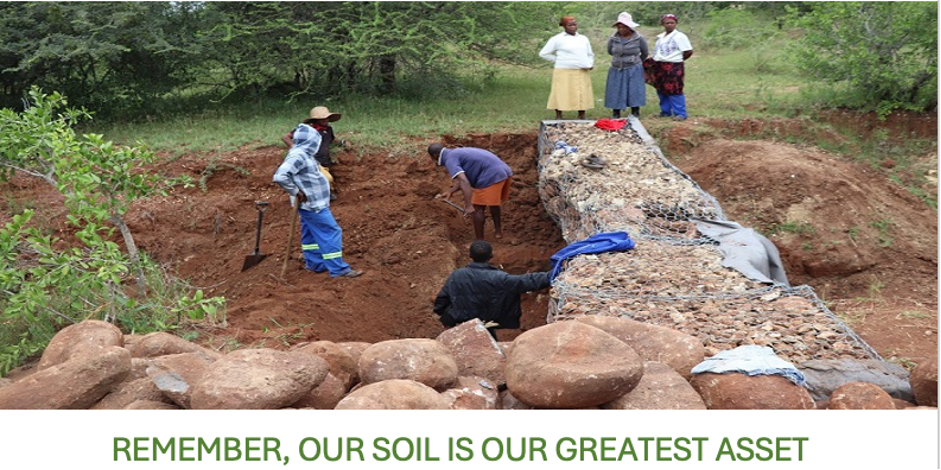
Land Degradation Surveillance Framework
Appreciating that the soil is our greatest asset, preventing land degradation is an often-overlooked major national priority. The project created a Land Degradation Surveillance Framework (LDSF) that provides a monitoring system combining satellite imagery with ground data observed in 13 sentinel sites. This mechanism enables an assessment of trends in the environmentthrough early detection of soil erosion hotspots and preventionbefore erosion occurs.
The SMLP also introduced farmers to the importance of water harvesting for domestic use and farming. Under the infrastructure for Soil and Water conservation component, the project showed farmers how to harvest rain water both at the homestead and in the fields. It also taught communities ways of building small irrigation dams and control erosion to enhance sustainable productivity of land and water resources.
The project also supports enhanced resilience to climate change through better management of land and other natural resources.
The SMLP was built around three pillars; community engagement, infrastructure development, and social empowerment; each foundational to the project’s impact. With a focus on collaboration, the EWADE worked hand-in-hand with local chiefdoms, empowering communities to participate in decision-making. This localized engagement created strong support systems that will continue to benefit smallholder farmers beyond the project’s lifespan.
Another key achievement was infrastructure development. Through SMLP, the EWADE constructed nine earth dams which now irrigate over 94 hectares of farmland. These dams provide essential water resources for market-led farming, especially in regions with scarce water access. Additionally, rooftop water harvesting systems were established in drought-prone areas, helping farmers secure reliable water for crop production.
The SMLP also formed structured market linkages in 37 chiefdoms, giving farmers the ability to produce surpluses and access local markets, boosting household income and food security. Beyond market access and production, SMLP prioritized youth employment and women’s empowerment particularly in value-added sectors like honey and horticulture. By engaging youth, SMLP helped cultivate a generation of agro-entrepreneurs, establishing a legacy that will continue shaping Eswatini’s agricultural industry for years to come.
Reflecting on the SMLP, Dr. Sithole notes: “Today, we look back at the significant strides achieved by the SMLP – many of which have exceeded expectations.”
The SMLP reached over 71,000 beneficiaries, of whom 82% were female-headed households. By creating market-driven opportunities, the SMLP didn’t just ensure that smallholders could feed their families; it empowered them to produce surpluses, unlocking new income opportunities and raised living standards. This market-led approach led to an 86% success rate – an unprecedented milestone for Eswatini’s agricultural sector.
We are confident of expanding this network and mobilizing it to target the 140,000mt of maize and 7000mt of beans needed by the country’s food security.

A reality of the Eswatini agriculture landscape is the small, (often less than a hectare) size of communal farm plots of smallholder that are often uneconomic for commercial agriculture.
Land aggregation enabling farmers to merge their plots into viable-sized farms is one of the objectives of the Smallholder Agriculture Productivity Enhancement Project (SAPEMP).
Launched in 2025 with a robust budget of E851,089,000 (US$45.5 million). This is funded by the Government of Eswatini in partnership with a consortium led by the International Fund for Agriculture Development (IFAD), Global Climate Fund (GCF) and private sector contributors.
This new project seeks to stimulate 17,000 smallholder farmers across all four regions and empower them to create sustainable commercial farming enterprises that will result in 7,500 new jobs and establish Eswatini as a regional leader in climate-smart, market-led agriculture.
SAPEMP is structured around three key components; Climate resilience; Market linkages, and, Institutional policies that enable sustained agriculture success and growth.
Water is critical to successful agriculture.
SAPEMP will infuse climate-resilient production that mitigates the effects of climate change and extreme weather events such as droughts, floods, and heatwaves.
The project will also focus on high-value crops like vegetables and legumes, which improve nutrition, increase food security, and boost incomes. Through technical support, community-based resource management, and climate-smart agricultural practices, SAPEMP will help farmers adapt to climate change and make their operations more resilient.
To progressively lift productivity, SAPEMP will provide farm extension support that extends technical guidance and coordinated production practices. Community-based resource management, climate-smart agricultural practices, and climate-proof infrastructure will be strengthened to increase yields in nutritious crops, thus enhancing resilience and nutrition.
The project will leverage on existing institutional arrangements established under the SMLP, including the Gender Action Learning System (GALS) and community development plans (CDPs) to mobilize farmers to participate in the project.
SAPEMP will seek incomes growth by connecting farmers with international markets through structured market linkages and access to financial resources.
To secure viable-sized farms, farmers will be organized into production clusters to create commercially viable operations that can be linked to agribusinesses networks and financial services.
Success of any national programme depends strongly on the policy and institutional framework for its enabling environment. The project will leverage on CDPs to achieve increased production and resilience; enhanced market access, income generation and stronger institutional support to enhance public service delivery.
By design, SAPEMP is focussing on producing three strategic outcomes:
Outcome 1: Gender equality and women empowerment that recognizes that women are the backbone of agriculture. Advancing gender equality and empowering women in agriculture will be one of the project priorities. This initiative will help women farmers transition to resilient, productive, and sustainable practices while improving food security.
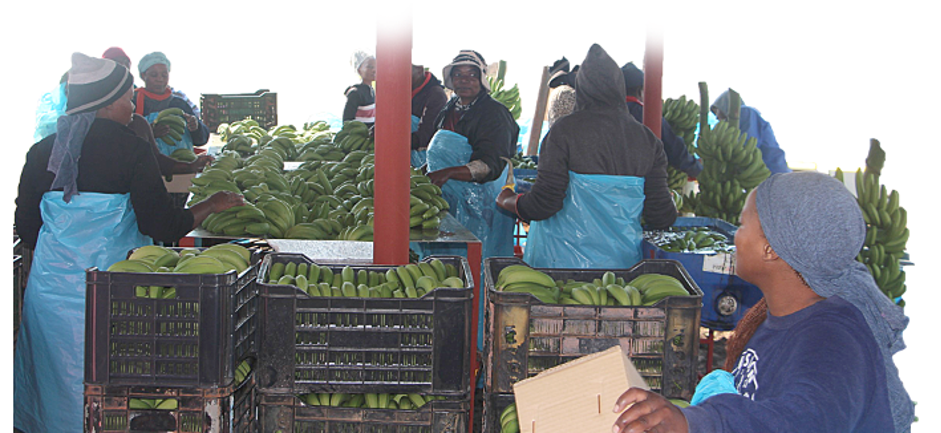

Outcome 2: Enhanced Market Access and Higher Incomes
Market access is vital for economic growth. SAPEMP will prioritize smallholder farmers’ access to competitive domestic and international markets and overcome historic barriers to market entry due to limited volume supply capacity and financing obstacles.
Farm aggregation enabling farmers to work together in production clusters will increase production volumes and production certainty while access to financing will ensure sustained production. and creating structured market linkages that empower farmers secure higher incomes with reduced risk.
A central component of this initiative will be linking smallholder production clusters with agribusinesses, creating sustainable business partnerships that match market needs. SAPEMP’s emphasis on building local partnerships will also help farmers finance and access structured markets, fostering a more robust agricultural economy.
Outcome 3: Stronger Institutional Support
The project will strengthen rural governance institutions enhance public service delivery and policies that support agricultural growth and navigate future challenges.
Similarly, SAPEMP will provide critical assistance to micro-entrepreneurs, vulnerable households impacted by economic shocks, and individuals seeking employment within agricultural value chains. It will seek to promote wage employment, self-employment, and entrepreneurial opportunities that broadly promote economic inclusion and benefit a cross-section the population.
Reaching All Four Regions of Eswatini
Project implementation will be nationwide with interventions in Hhohho, Lubombo, Manzini, and Shiselweni. SAPEMP will leverage on existing irrigation systems in regions like the Komati Downstream Development Project (KDDP) and Lower Usuthu Smallholder Irrigation Projects (LUSIP I and II) to maximize production and enhance year-round food security.
By concentrating efforts on regions in need and utilizing established resources, SAPEMP will ensure continuous production, increase incomes, and bolster food security. This all-encompassing approach will drive sustainable growth and benefit communities throughout Eswatini, fostering agricultural stability in some of the nation’s most vulnerable areas.
Empowering Diverse Beneficiaries
SAPEMP is designed to impact a broad range of smallholder farmers (SHFs) across Eswatini, classified into three types:
- Type 1 Beneficiaries: Food-insecure SHFs who are highly vulnerable to climate shocks. SAPEMP will offer them training, extension services, and climate adaptation support to improve their resilience.
- Type 2 Beneficiaries: SHFs who are partially market-oriented. These farmers will receive support in market linkages, skills development, and access to financing to increase their productivity and marketability.
- Type 3 Beneficiaries: Commercially oriented SHFs who play pivotal roles within their communities as aggregators. SAPEMP will support them through technical assistance, business skills training, and enhanced financial access.
This inclusive approach enables SAPEMP to empower a wide array of farmers, ensuring that even the most vulnerable benefit from enhanced market access, technical skills, and climate resilience.
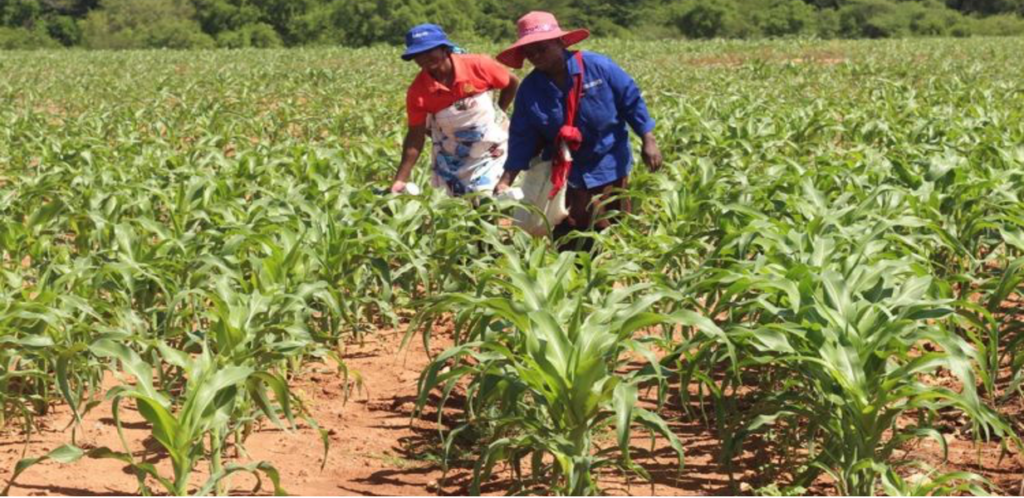

The top priority of the agriculture sector is to support the national drive for food sovereignty.
In support of His Majesty’s Government to harvest and store 140,000 mt. of maize and 7,000 tonnes of beans, EWADE with support of the Ministry of Agriculture embarked on the Commercial Maize Project (CMP) to increase maize and beans production.
The CMP is a collaboration under which EWADE mobilizes and supports farmers grow maize and beans for an assured market provided by the National Maize Corporation (NMC).
EWADE provides critical farming inputs through the Hamba Ubuye Revolving Fund, while NMC guarantees a stable market for farmers’ produce, ensuring they can focus on cultivation without the uncertainty of market conditions.
The CMP is supported by a revolving fund valued at E44,812,500 and seeks to cultivate 6,800 hectares of land from both Eswatini Nation Land and Government farms that will be dedicated to commercial maize and beans production.
Launched in the 2021/22 crop season, the CMP targets delivery of 10,000 maize metric tons per year from communal land smallholders together with selected Government Farms.
The CMP is growing slowly but steadily, rising from an initial 17 farmers who joined the scheme when it launched in the 2021/22 cropping season bringing a total of 173 ha. Their harvest of 594 mt. was sold NMC. The following year the number of farmers grew almost fourfold to 73, planting 545,2 ha and harvesting 1,361.88 mt in the 2022/23 season.
By 2023/24, 106 farmers were on the scheme, planting 856ha, and harvesting 2,148 mt; and the following year, that number had doubled to 207 farmers cultivating 1,549ha, harvesting 8,084mt.
Government farms allocated to the project are at Buseleni, Correctional Services at Balegane and the Umbutfo Defence Force.
Maize cultivation on two Government Farms started in the 2022/2023 crop season, 18.7ha planted at Buseleni with a total yield of 77.3 mt. sold NMC and the local market.
Bean Production
The Project was initiated in the 2025/26 crop year in partnership with the National Disaster Management Agency (NDMA). It supported 54 farmers (38 males, 16 females, and 10 youth) to cultivate 102ha in all four regions. They were supported with inputs valued at E1,607,584.71. The harvest is still anticipated.
Beans are also planted on 50ha at the Paradise Government farm.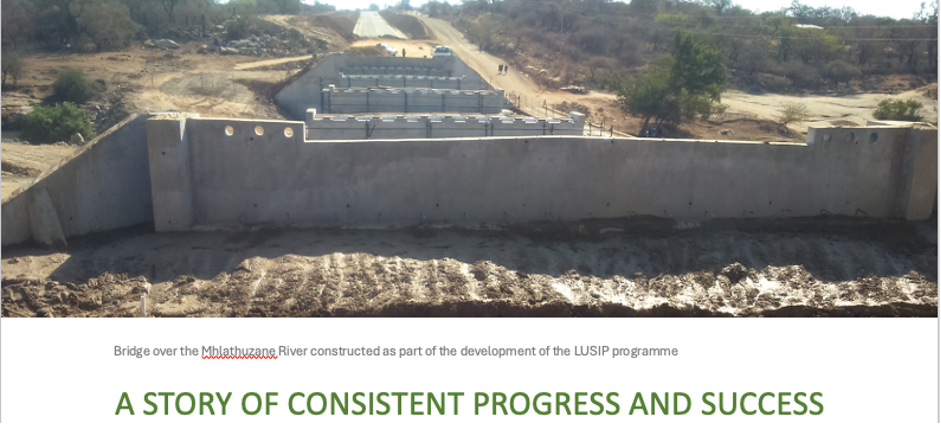
His Majesty’s second site tour of the Mpakeni Dam project on 13th October is symbolic of his close interest the successful execution of a vision that has crystalized into series of successes that produce ongoing tangible and visible social, economic and human capital results.
To date, EWADE has undertaken 11 major projects that have straddled the range of initiatives that drive successful agriculture. EWADE has built one major dam – the Lubovane on the Mhlathuzane River. But it has also built many other smaller dams to bring relief to communities outside its main project areas.
EWADE’s 8 successfully completed projects strongly demonstrate the validity of an ambitious vision to leverage on the nation’s water resources to stimulate agriculture productivity, national economic growth, wealth creation and poverty eradication.
MNWAP is the fourth in a series major of initiatives that have made significant national development impact in the past 25 years – a pleasingly continuous success story reflective of His Majesty’s visionary leadership. At the turn of this century, he created EWADE and assigned it the task of transforming a desperately poor, bone-dry and inhospitable Lubombo Lowveld into a land of prosperity – a task that would have been viewed analmost impossible at the time.
EWADE started the journey of transformation by harnessing the water from the bi-national Maguga Dam on the Nkomazi River to create the Komati Downstream Development Project (KDDP). In a unique social engineering experiment, EWADE persuaded 3500 homesteads under 10 chiefdoms in three Tinkhundla to agree to work together and collaborate by consolidating their subsistence smallholdings into 27 commercial-size farms covering a 6,000ha estate. EWADE then supported the companies secure bank loans and acquire farm equipment and irrigation infrastructure to create successful irrigated farms. EWADE also helped the farmers develop 60 km of roads that enabled farms to transport their produce and connected them with secure markets.
The company exited the KDDP in 2010, leaving behind a strong agri-business community that is benefitting about 20,000 people and earning significant income from sugarcane cultivation, grain crops and vegetables cultivation as well as livestock production. KDDP was the first successful experiment that transformed Eswatini Nation from subsistence to commercial agriculture that replaced poverty with sustained high value wealth creation.

For the past 10 years, EWADE’s identity has been inseparable from the Lower Usuthu Smallholder Project (LUSIP). Under the mandate to eradicate poverty and bring prosperity to extremely water-stressed Lubombo lowveld communities, the company applied the successful KDDP development model.
Beginning in 2004, EWADE mobilized communities under five chiefdoms and motivated the consolidation of their smallholder plots into commercially viable farm sizes to create a 6 500-ha estate in Phase 1 of the LUSIP project.
Agriculture, especially in the Lubombo basin required significant investment in water – a very scarce but essential resource. To solve that problem, EWADE developed the Lubovane Dam, co-financed by the Government of Eswatini supported by a consortium including the International Fund for Agriculture Development (IFAD), the African Development Bank (AfDB), the Arab Bank for the Economic Development of Africa (BADEA), the Development Bank of Southern Africa (DBSA) and the European Commission (EC) to raise E2.1 billion for the first phase of the LUSIP project.
Concurrently with water development, EWADE supported the communities register 60 farmer-owned companies with 3,121 shareholders and helped them secure loans and provided them with business training and technical support to build commercial farming capacity.
building. About 5,045 ha of the 6 500-ha LUSIP 1 estate went to sugarcane and banana cultivation while 1,071 ha went to alternative cash crops. The projects benefitted 20,118 people in 2,874 homesteads.
The project results are impressive. By introducing intensive commercial agriculture, it had significant poverty reduction effects. It also created sustained improvement in the standard of living of the population across several dimensions.
Besides incomes and significantly improved livelihoods, the project brought clean water and sanitation facilities that improved the health of the project communities.
- 6 potable water schemes constructed supporting a total of 20,118 people (2,874 homesteads) with sanitation facilities and 14,646 (2,740 homesteads) people with clean water.
- Total loans disbursed to FCs were
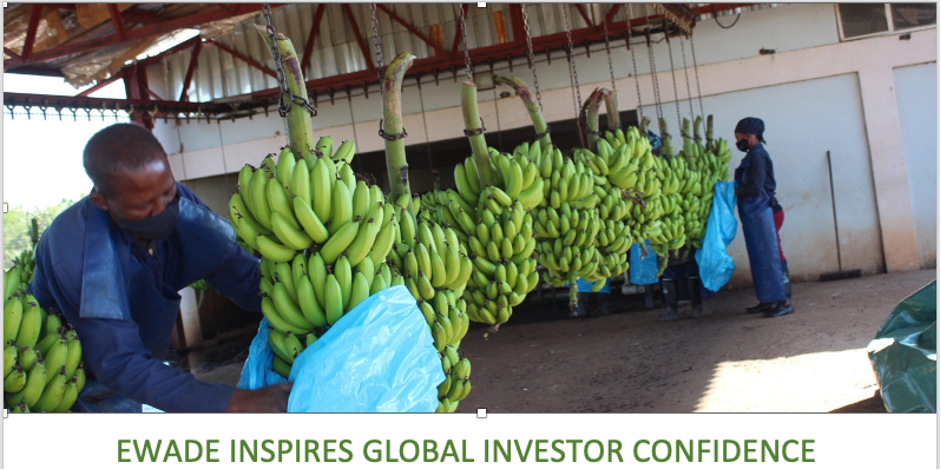
EWADE project management and results have continued to impress international investors. One of the biggest evidence was the way international development funders came through to support the Government of Eswatini extend its successful LUSIP initiative into Phase 2 to bring development to even more of the Lubombo basin.
A consortium of funders including the African Development Bank (AfDB); the European Investment Bank; the Kuwait Fund and BADEA raised E2.1 billion to support LUSIP II in 2016.
This ambitious project extended the canal from Siphofaneni almost 60 kilometres past Big Bend and Matata to Nsoko and Lubulini.
Once again, EWADE brought together communities under the chiefdoms of Madlenya, Ngcamphalala, Shongwe, Gundvwini-Lesibovu, Mamba-Mamisa, Bulunga-Mahashulane, Mphumakudze-Mphaphati and Mngometulu to consolidate their lands and form 30 commercial farming companies.
The new project which is still ongoing with new land still being developed, created a net irrigation area of 5,728 ha (5, 273 ha of new irrigation area and 455 ha of existing irrigation).
Already, this project that has reduced emphasis on sugar cane cultivation to concentrate on food and fruits.
Under irrigation, the warm climate allows two-crops a year farming that has enhanced production of the nation’s priority stable food, especially maize, cultivated in summer and beans in winter.
As a measure of its success, the top 10 award winning farmers of producers of maize and beans in the 2025 annual NMC awards came from the LUSIP II project.

EWADE has become a strong driver of national priority to grow the food that it eats. Eswatini currently spends billions each year importing its national stable food of maize and beans; often paying in expensive foreign currency.
Government has mandated EWADE to secure 6,800 ha of smallholder plots and Title Deed Land to produce 30,000 mt of maize a year as a priority and emergency programmes to contribute to the food basket.
The Commercial Maize Project (CMP) is a nationwide programme on Eswatini Nation Land (ENL), Government Farms and Title Deed Land; providing structured support systems, including access to improved inputs, technical assistance, and guaranteed market access to farmers growing maize and beans.
The CMP target was initially to secure 6,800 ha, and deliver a 30,000 annual harvest to the national grain storage at the National Maize Corporation (NMC). However national demand compels that it is scaled up to contribute to the 140,000 mt the country requires for food self-sufficiency annually.

Underlying the CMP, is an innovative revolving funding mechanism in which EWADE invested E44,812,500.00 to create Hamba Ubuye, a revolving fund that provides smallholder farmers loans to buy farming inputs.
The project is growing gradually with 73 farmers bringing 545.2ha joining the scheme by 2022/23. Their harvest of 1,361.88 metric tonnes was sold to NMC and 206 farmers with 1568 ha harvested 3530.17mt in the 2023/24 season.
The scheme now has 248 farmers nationwide who cultivated 1861 ha who delivered 7,444 mt. in the 2024/25 season.
Government farms are also starting to jon the scheme. By 2024, the project had brought in Government farms at Bhalekane, Buseleni and from the Umbutfo Eswatini Defence Force.


The EWADE corporate strategy 2022 – 2027 creates a roadmap of a future in which the company will continue to do national development work with less subvention.
A new Commercial Wing is poised to become a profit-making subsidiary that will drive long-term sustainability and reduce dependence on government funding.
The wing will evolve into a registered subsidiary, will leverage on EWADE’s expertise in agriculture and socio-economic development to provide innovative water and agricultural commercial services that support profitability in the agriculture sector. The Wing’s success is designed to decrease reliance on government subventions.
The long-term goal is to evolve the wing into a fully registered, profit-making subsidiary under EWADE.
Since formation, the Commercial Wing has already made significant progress and delivered six projects valued at E638.4 million. These include the FAO- GEF-8 Food Systems Project, Eswatini Youth Employment Opportunities Project (EYEOP), Commercial Maize Project (Hamba Ubuye), Water and Infrastructure Services for LUSIP II, nine Earth Dams, and the MNWAP Concept under GEF 8 for INCOMATI watercourse strengthening.
Central to EWADE’s core mandate are permanent responsibilities over the nation’s water resources. This includes oversight of the Maguga Dam and the Eswatini portion of Lake Matsamo. While the the dams, ancillary works and resettlements are the responsibility of the bi-national Komati Basin Water Authority (KOBWA), EWADE is required to monitor and evaluate resettlement and development processes for communities affected by Maguga and the Eswatini portion of Lake Matsamo. This includes mitigation of impacts of activities on people displaced by Lake Matsamo as well as planning and Implementation of the Komati Downstream Development Programme (KDDP) to enable Eswatini to utilise its share of water from Maguga Dam.
EWADE’s water mandate also covers planning and implementation of the Lower Usuthu Development Project (LUSIP), the Mkhondvo Ngwavuma Augmentation Projects (MNWAP) and any other river basins and agricultural Developments.
Incoming projects
Several key projects are positioned to drive future growth and development. These are designed to enhance agricultural productivity, improve food safety, and uplift local communities, contributing to our long-term objectives of economic sustainability and resilience.
The current EWADE Corporate Strategy 2022-2027 is also focused on the completion of MNWAP projects such as the Mpakeni Dam, construction of the Ethemba Dam on the Mkhondvo and boring tunnels to bring water from Mkhondvo to Mpakeni and Mpakeni to irrigations sites as far as St Phillips in the north, Lavumisa in the South East and Matsanjeni in the south.
SAPEMP will also be rolling out in 2026. This 8-year project that will invest SZL 851 million into agriculture development and launched in 2025 will take the company beyond 2032, It complements the CMP-Hambu Buye project and aims at mobilizing 17,600 farmers in all four regions to strengthen cultivation of maize, beans and other crops. For the success of this project, EWADE is collaborating with a range of government agencies and the private sector. SAPEMP will entail the construction of dams around the country. The first development projects as determined by the Government through an MoU with the Ministry of Natural Resources and Energy. two of these are planned for Mangcongco and Sidvokodvo in the Manzini Region as well as the Nondvo Dam in Ezulwini.
The youth
The future belongs to the youth. In the pipeline is a major youth capacity development programme funded by a World Bank facility. The Eswatini Youth Empowerment Opportunities Project seeks to increase chances for targeted youth to earn income by supporting self-employment in areas such as on-farm agriculture, related value chains, and other services.
The project will also helps build a digital system for social support programs to better identify and assist vulnerable young people.


